| Tweak Extreme |


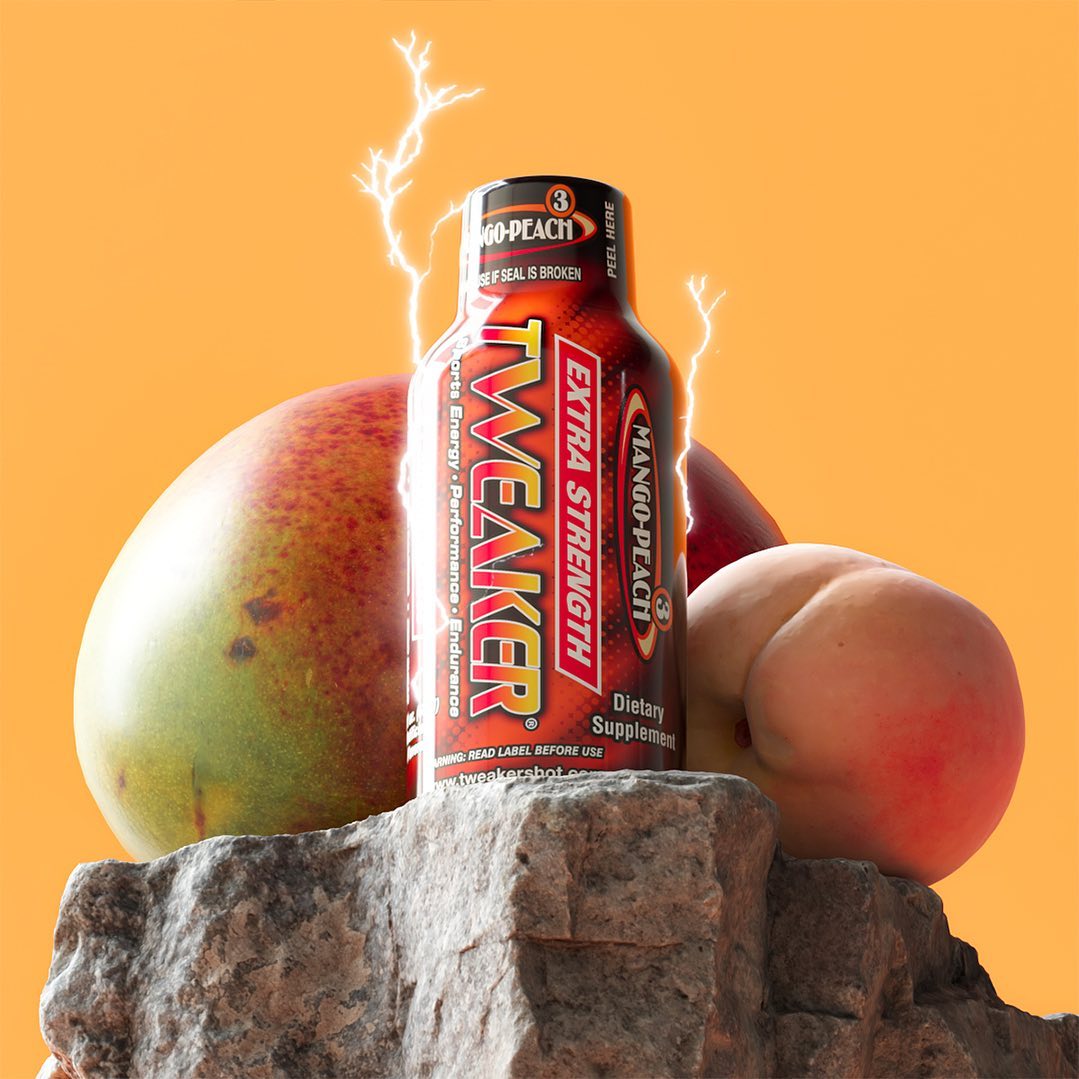
| Tweaker Energy Shot |
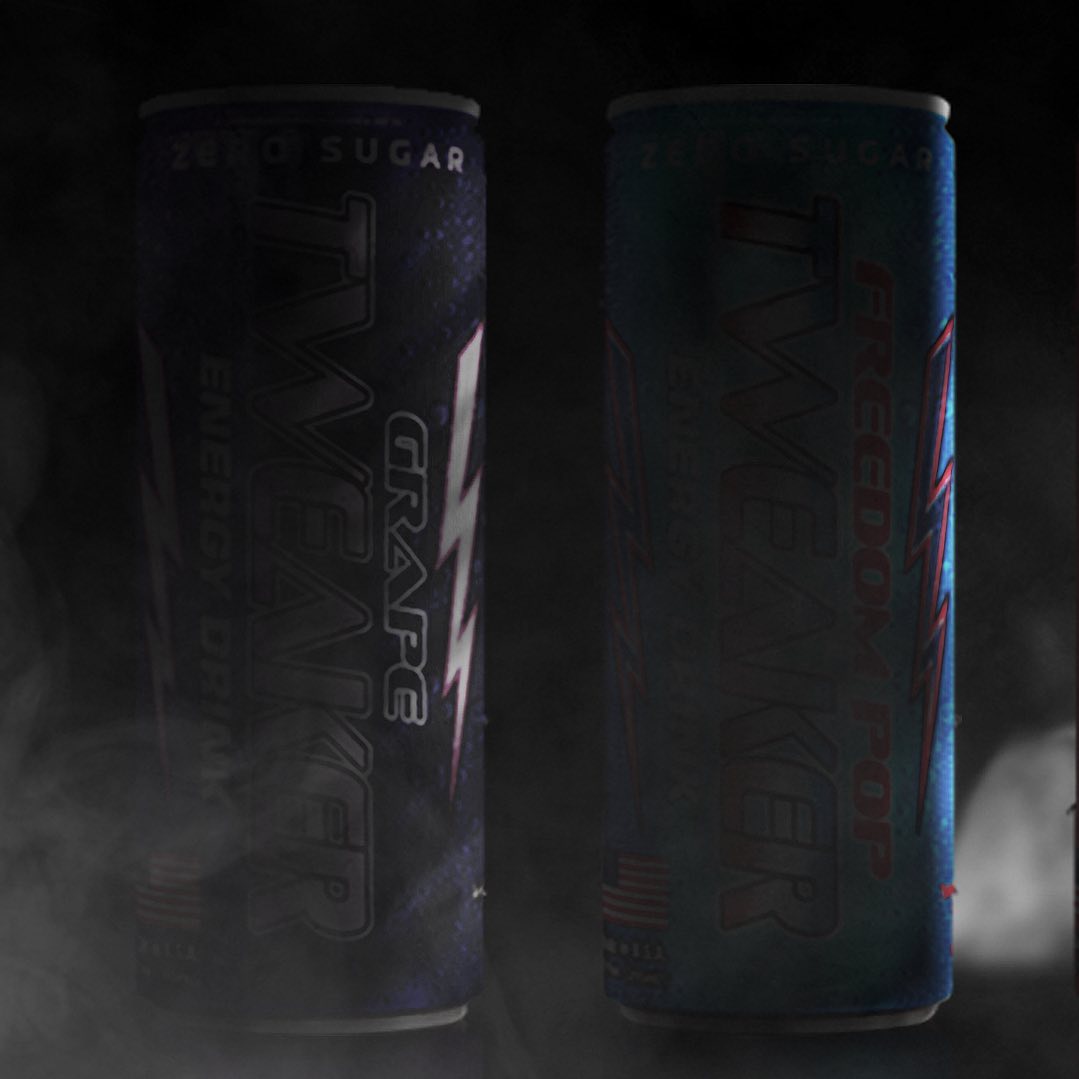
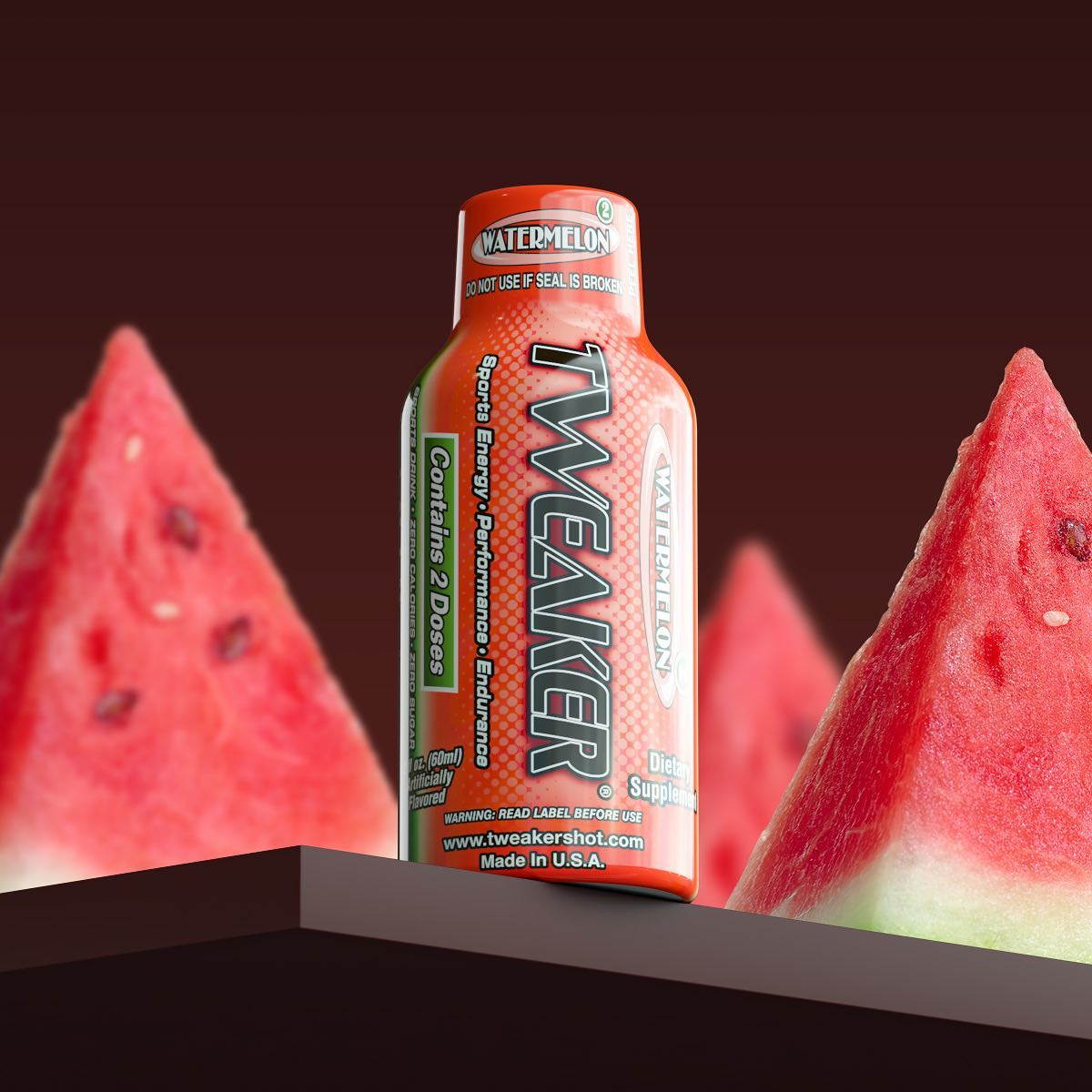
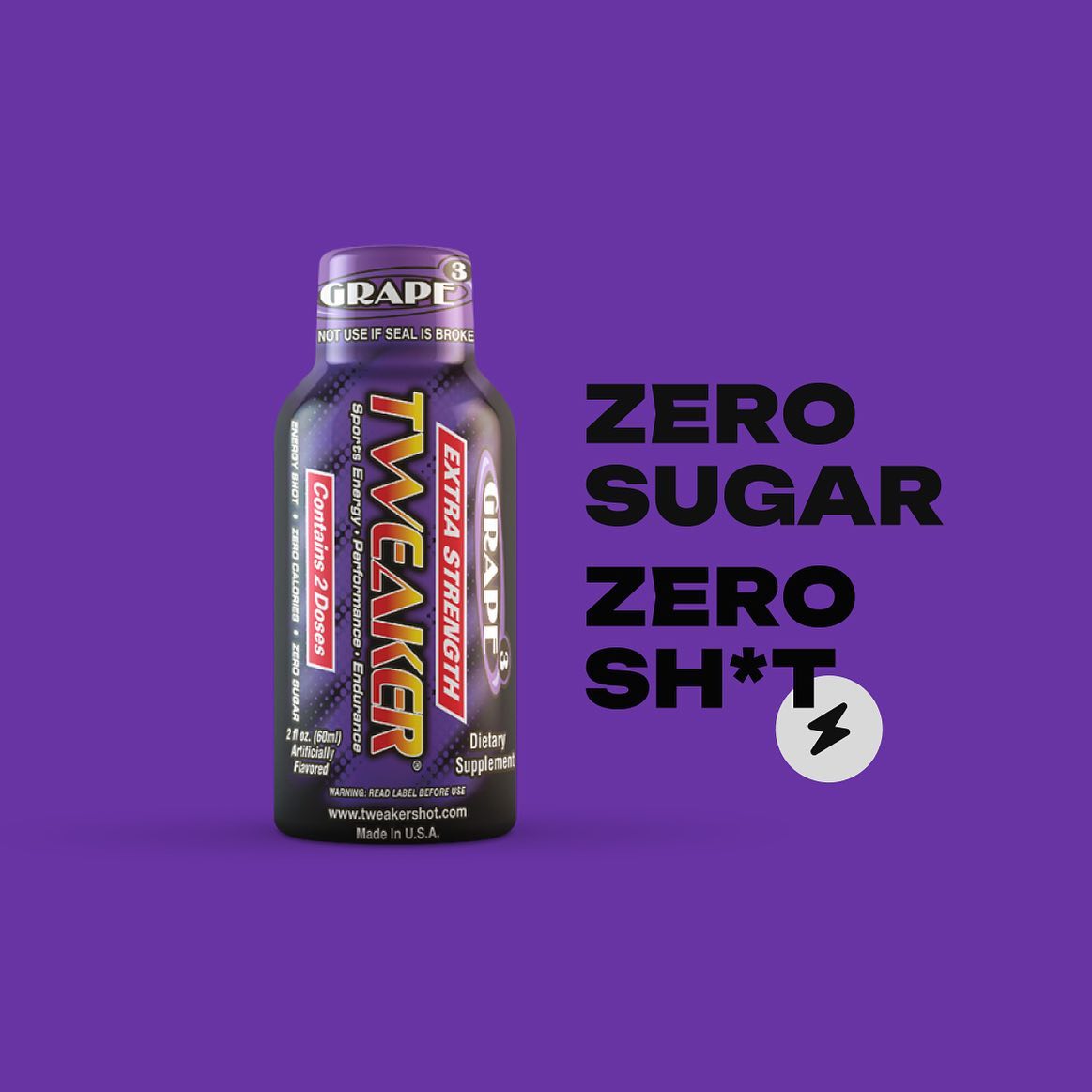
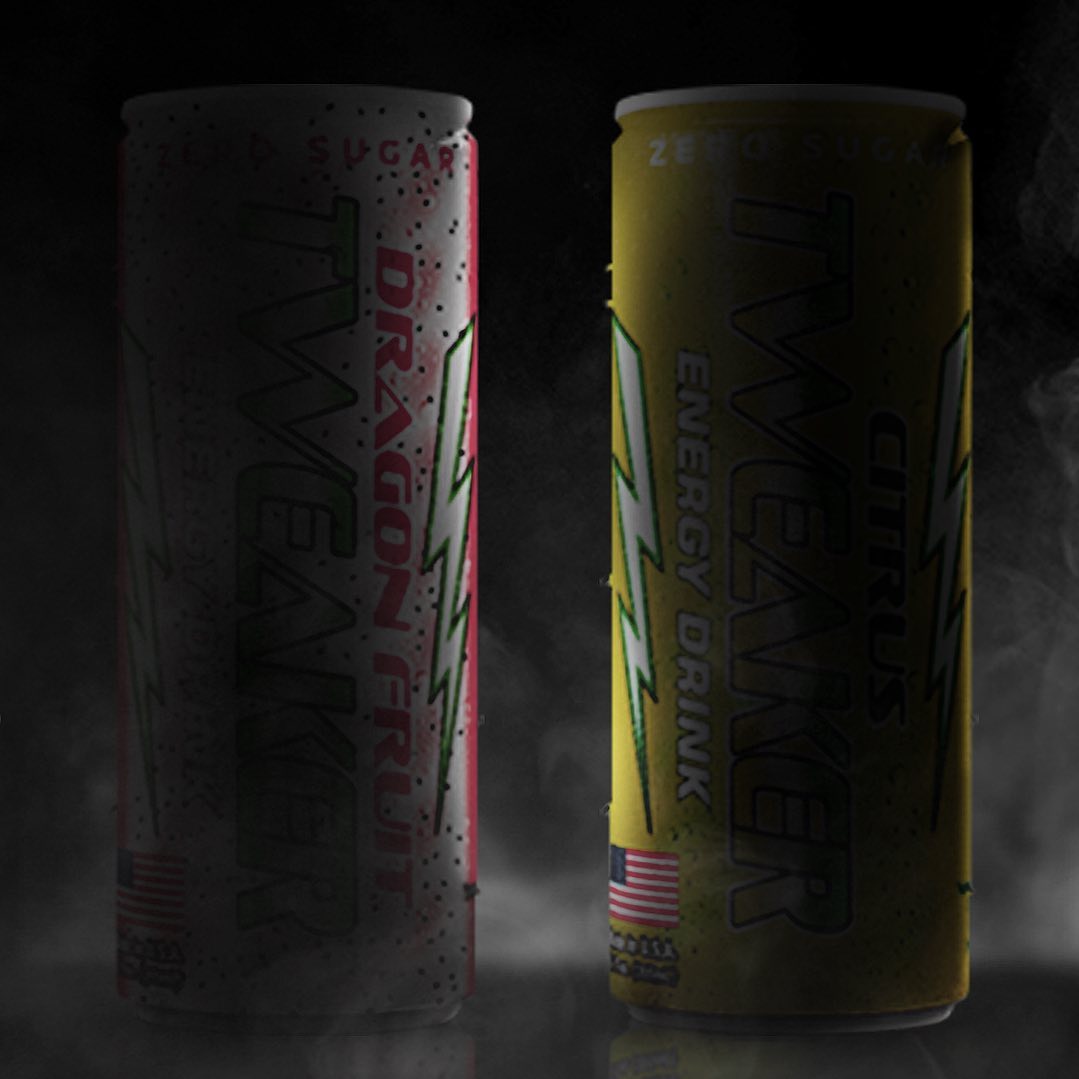
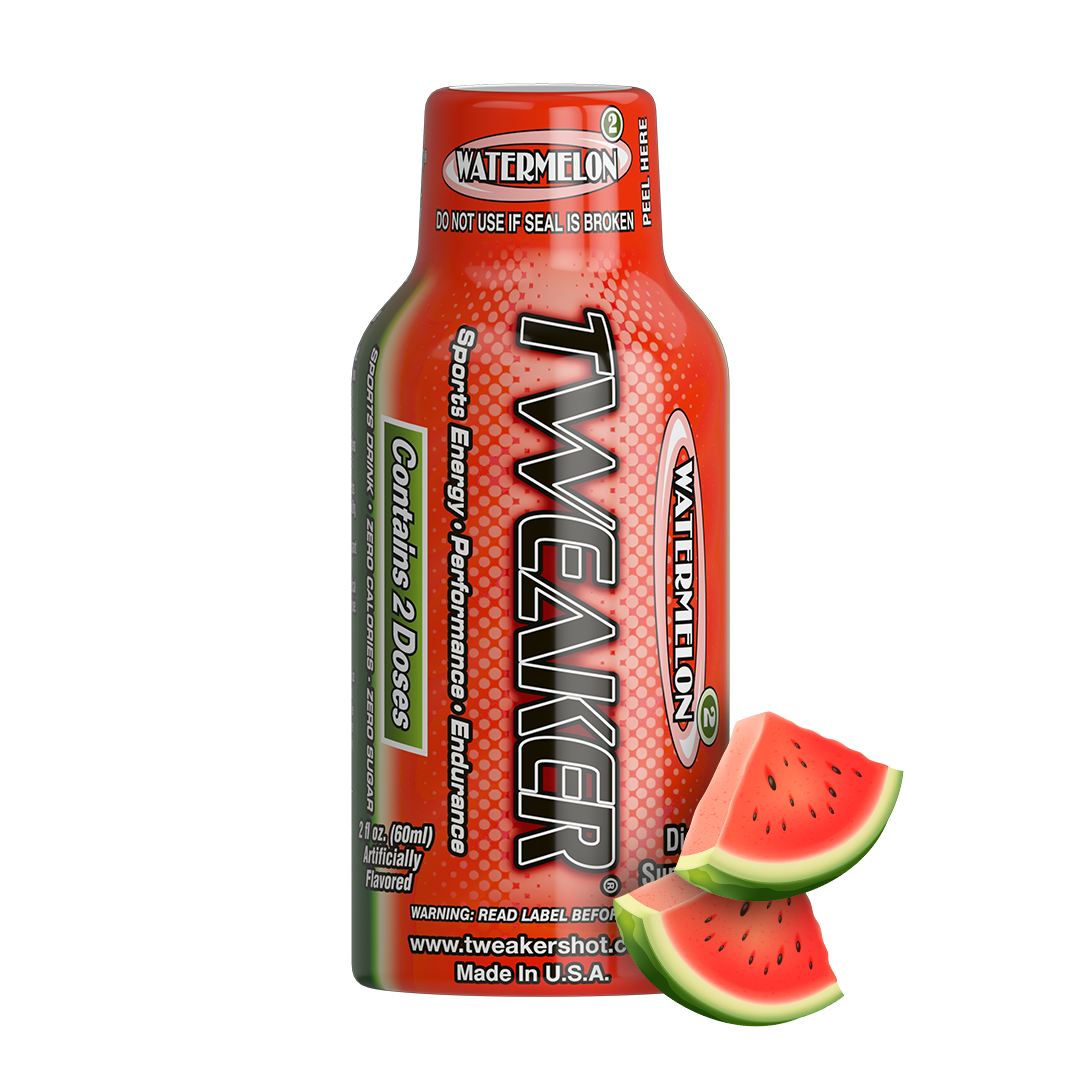
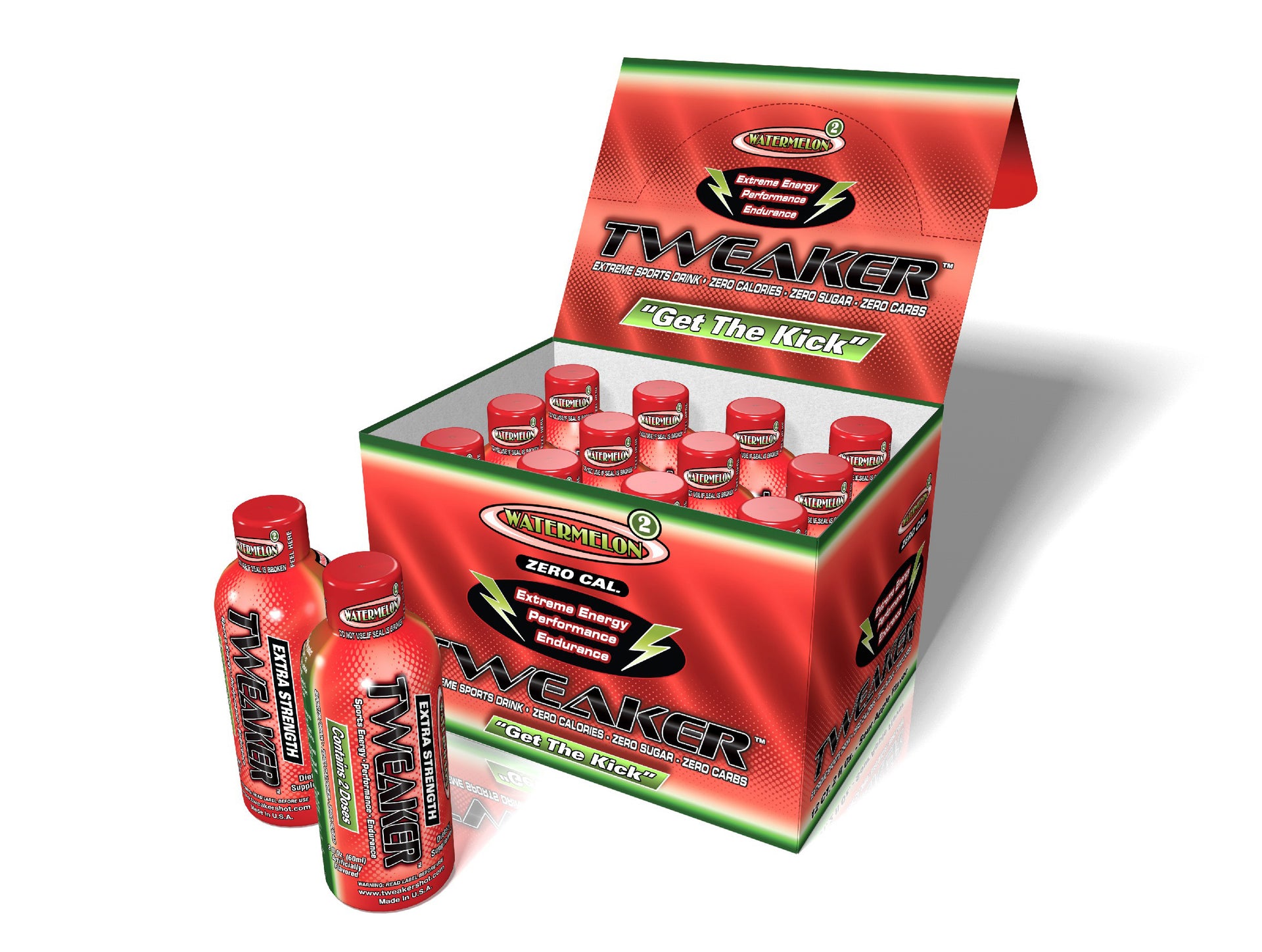
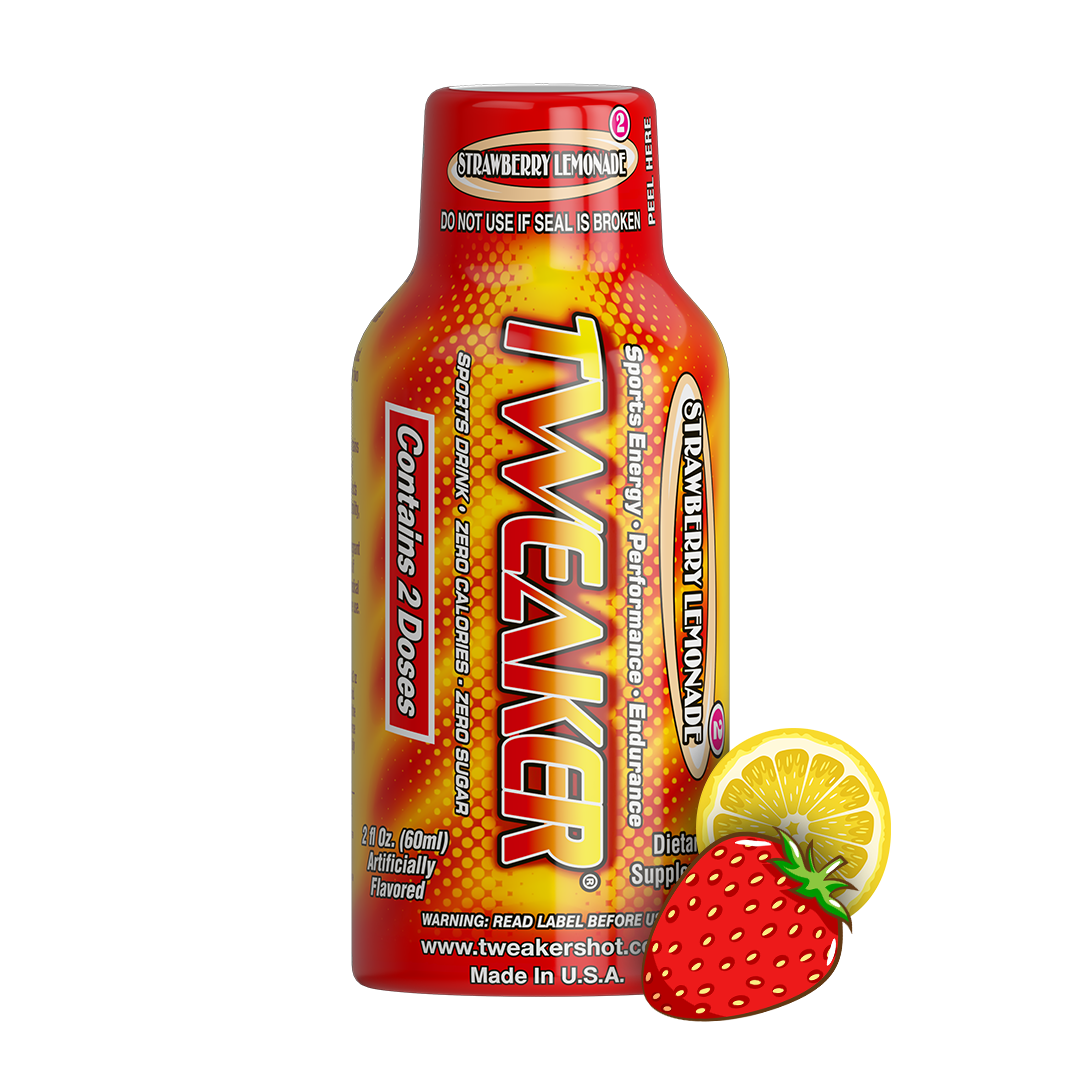
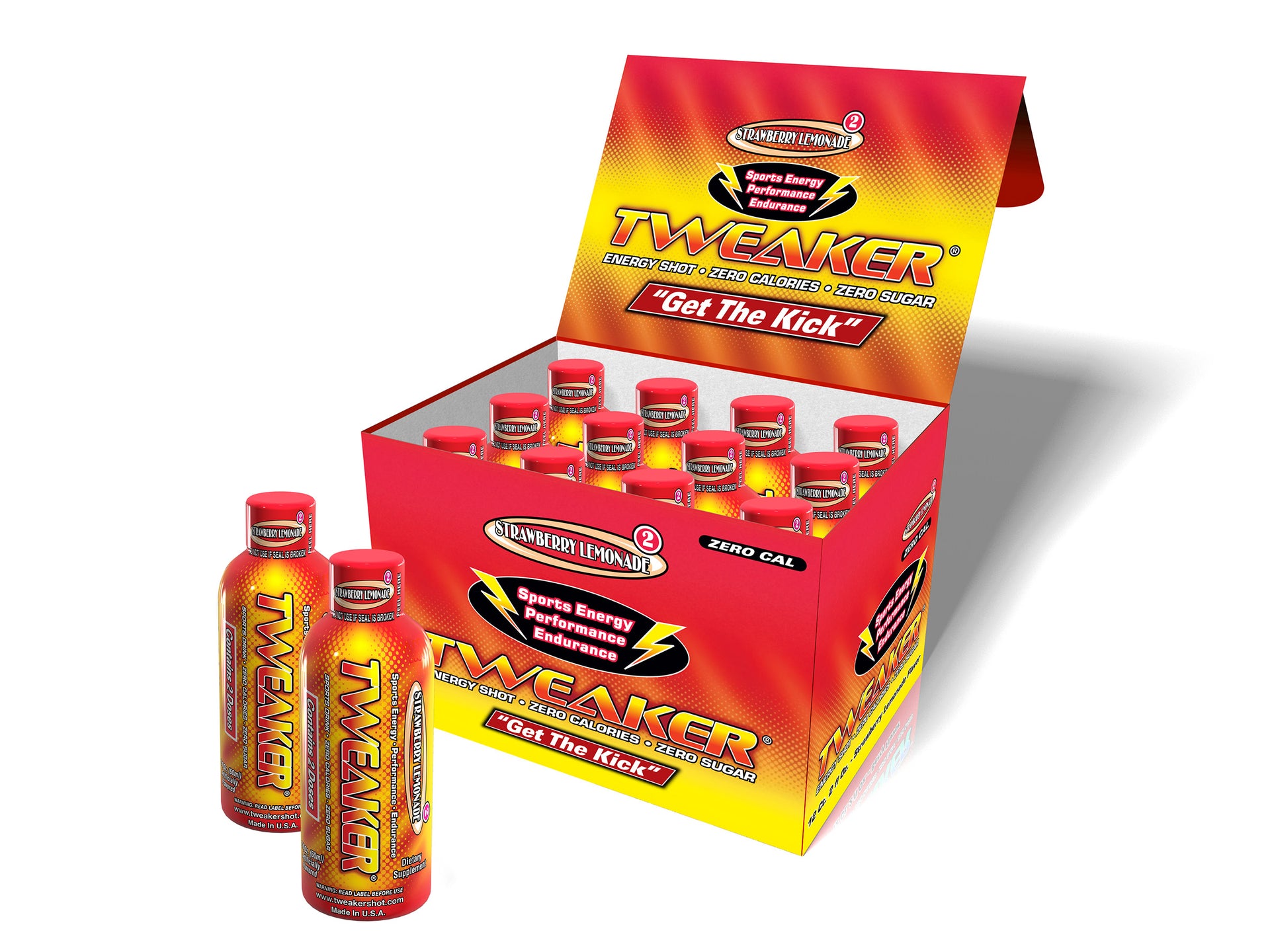
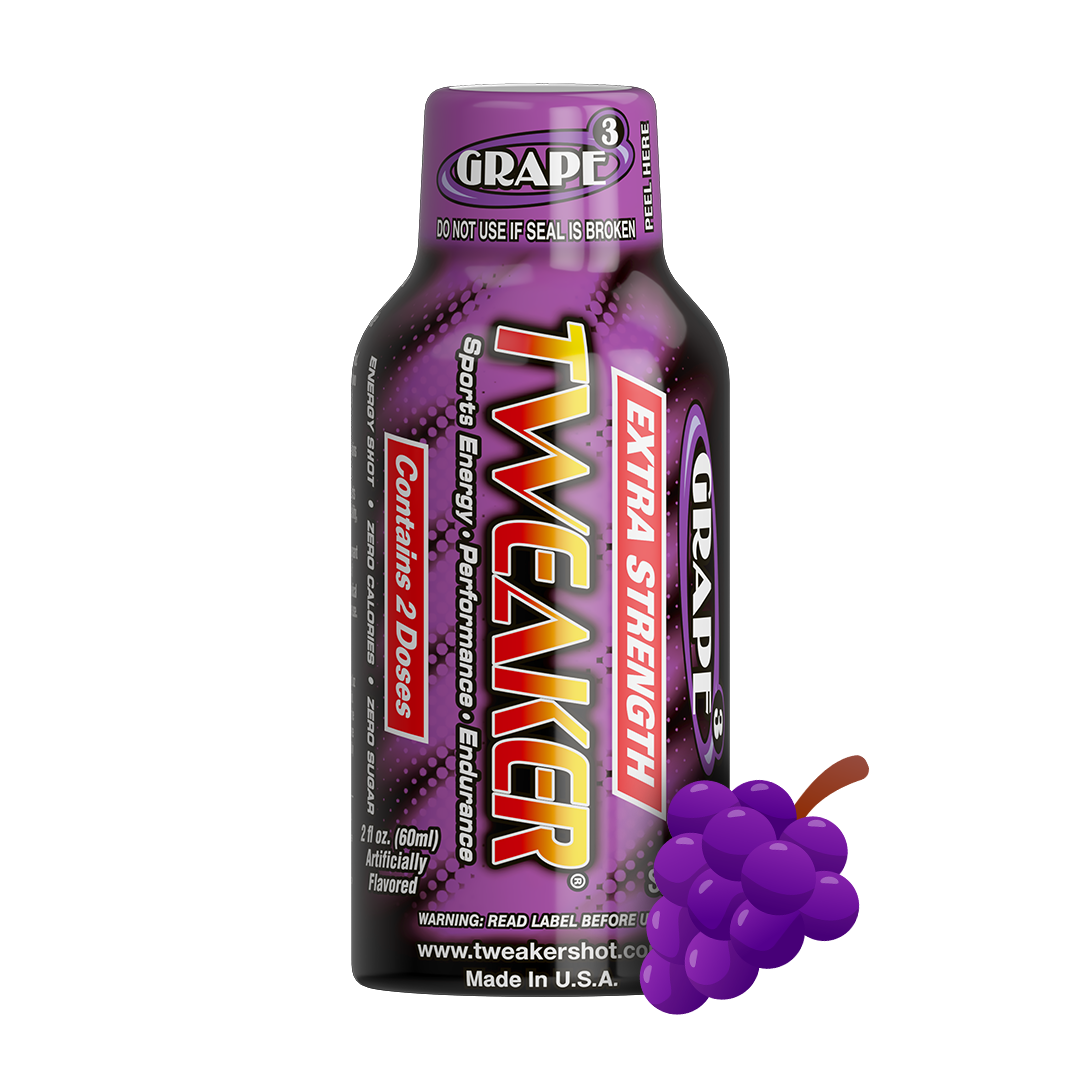
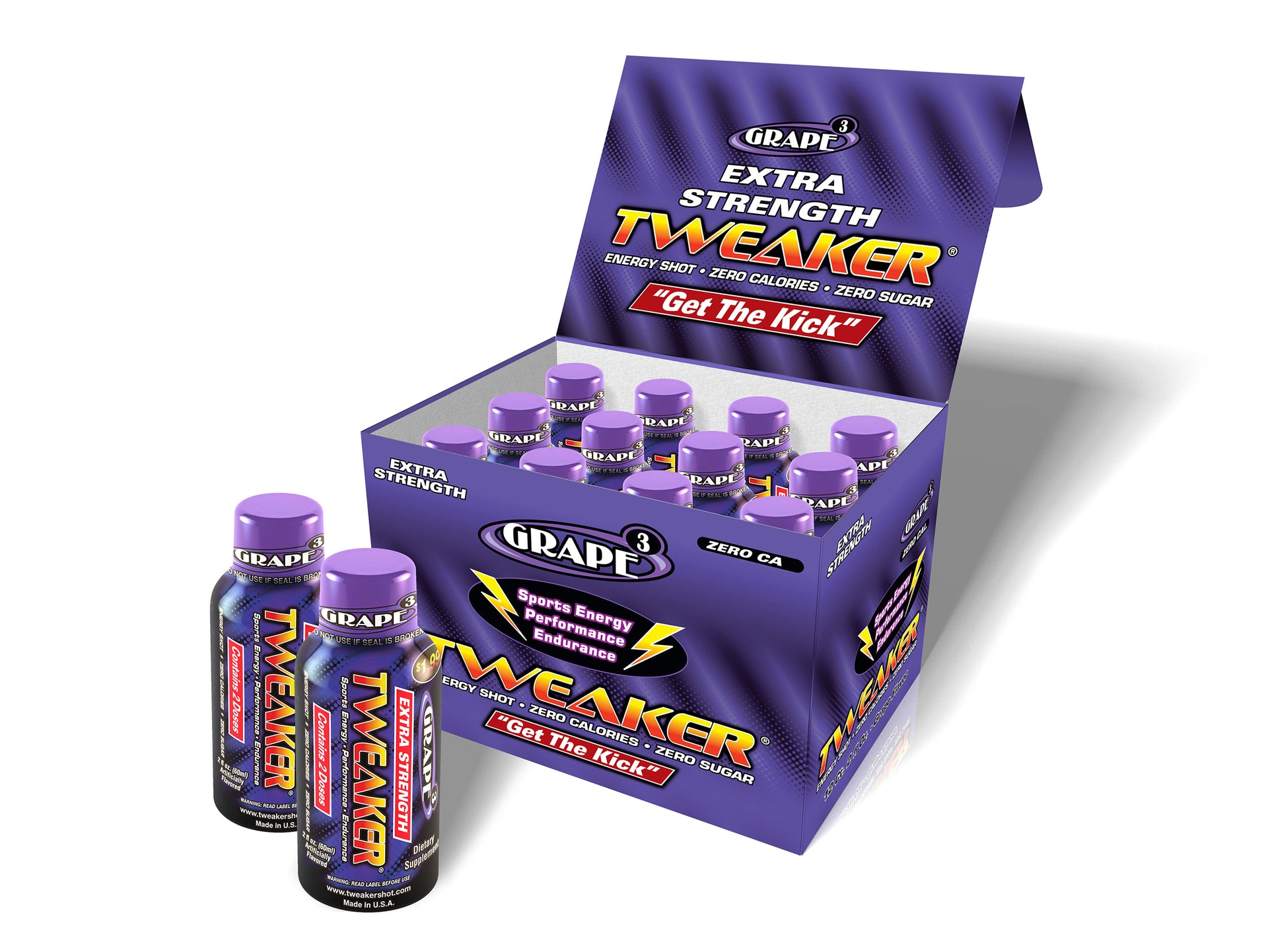
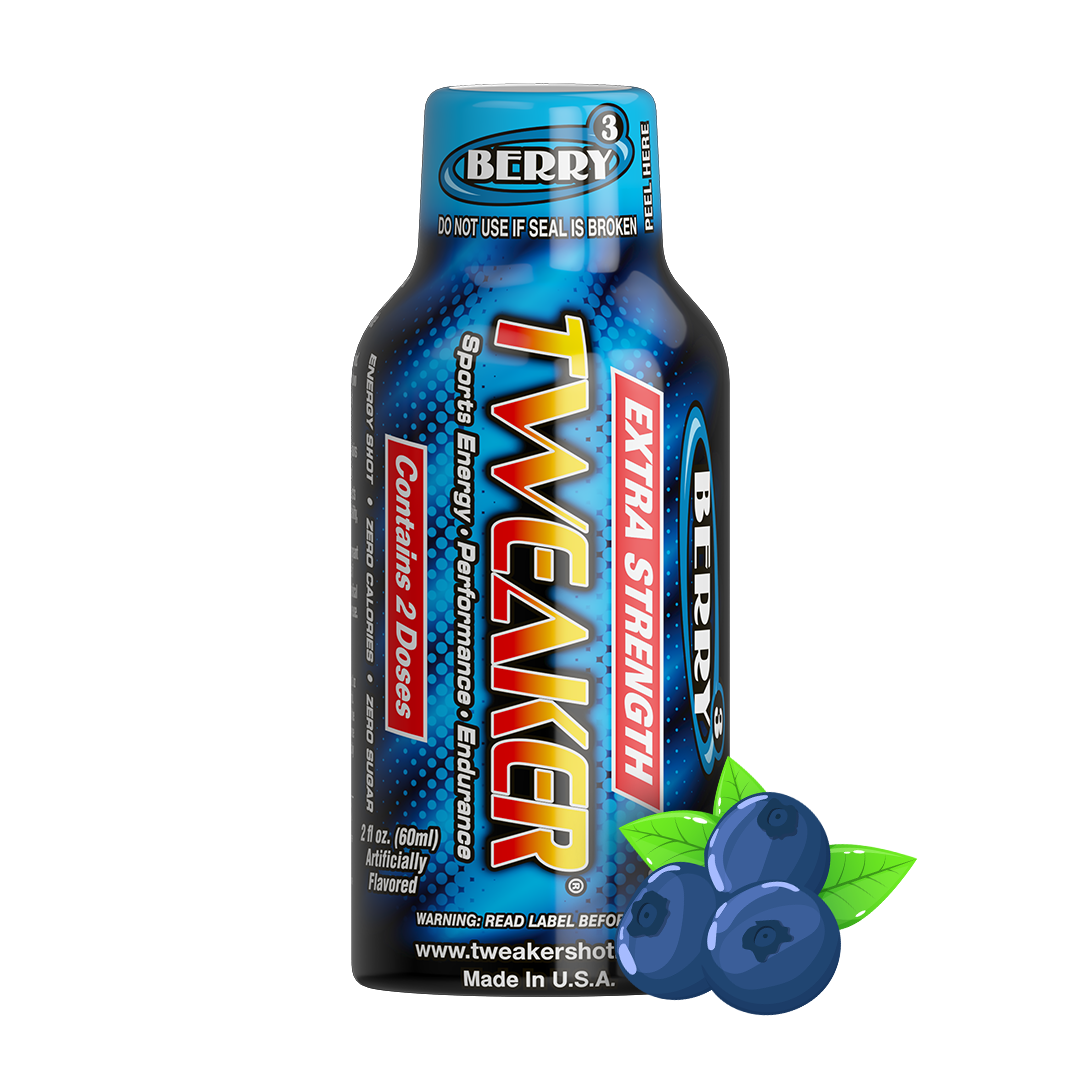
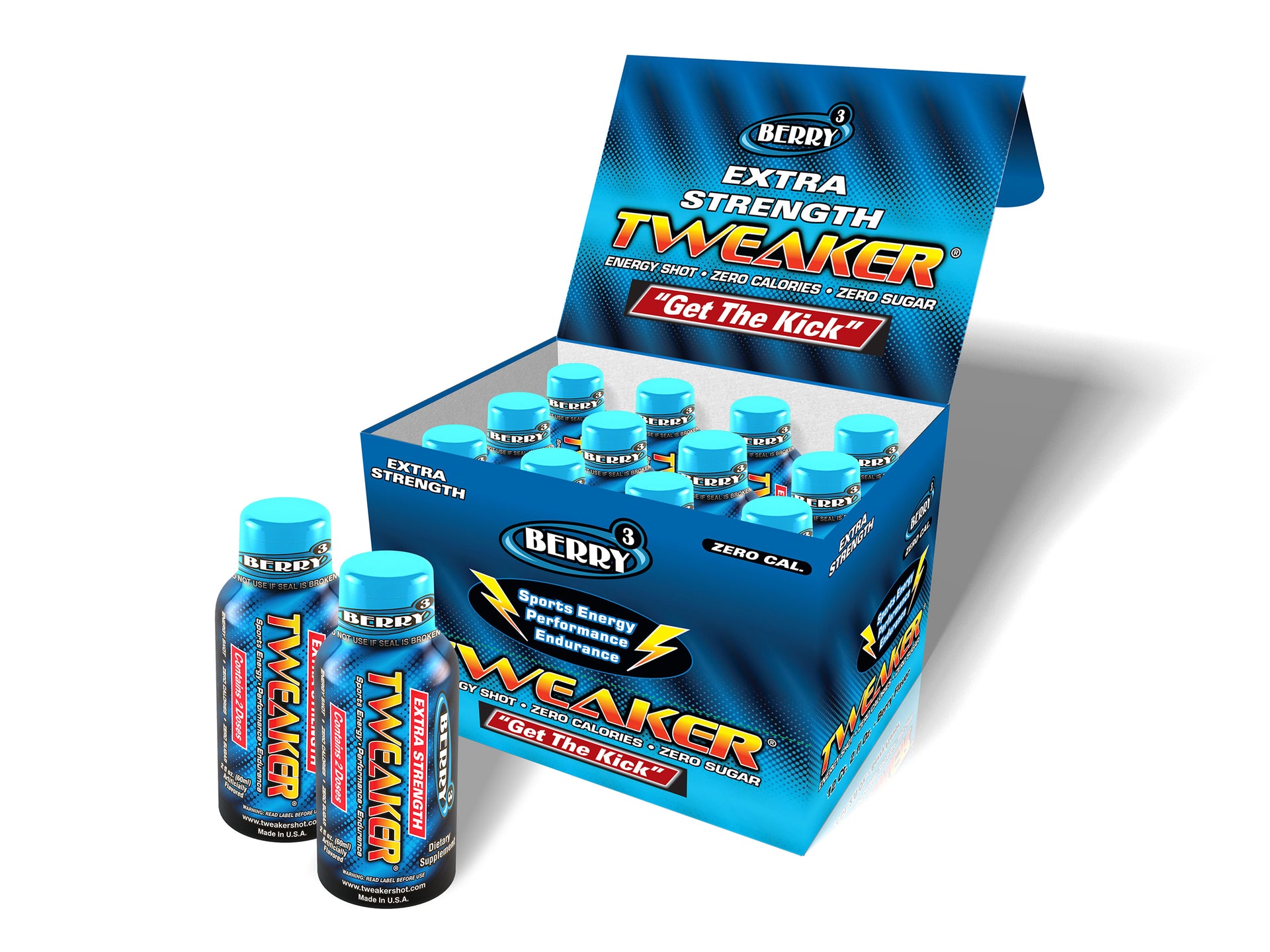
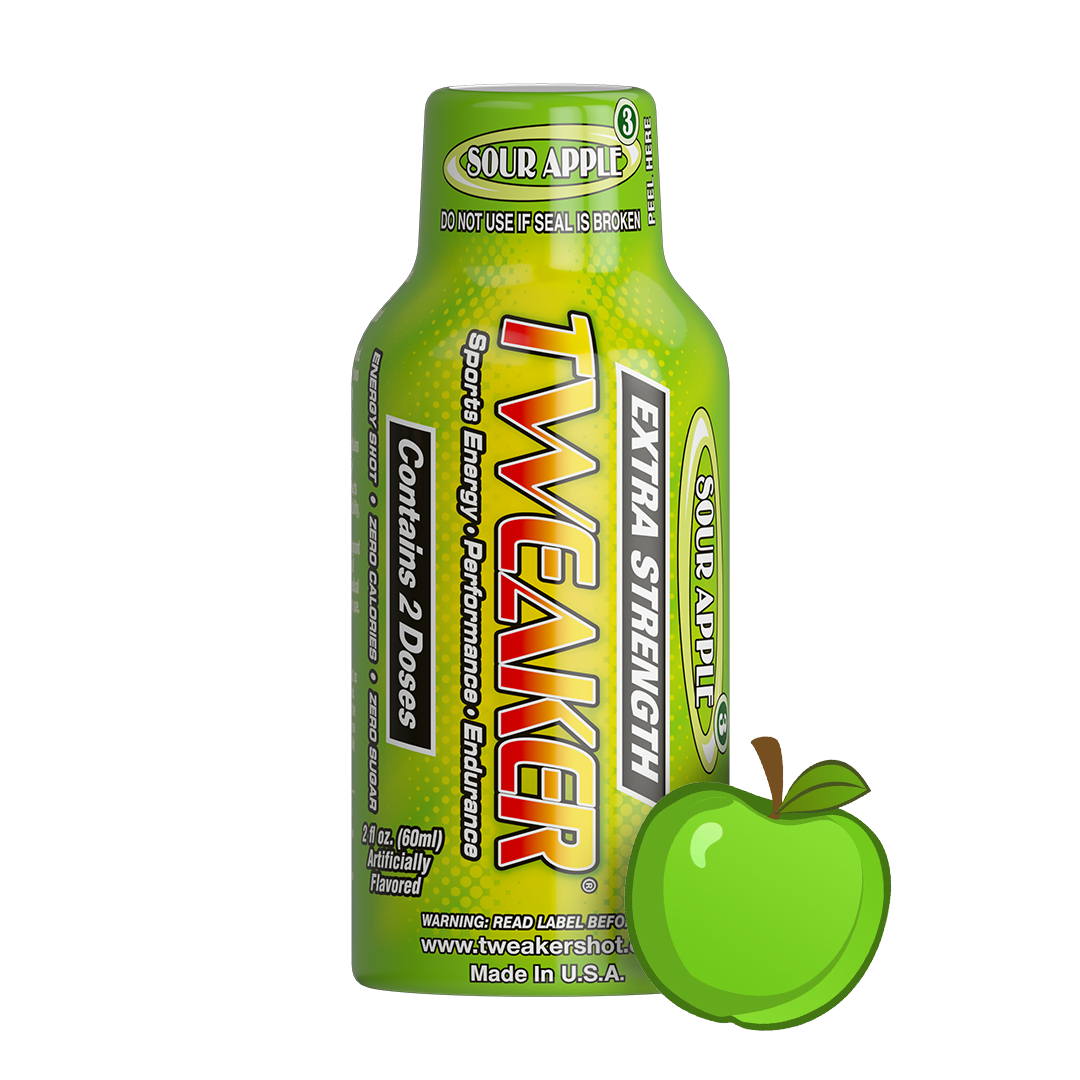
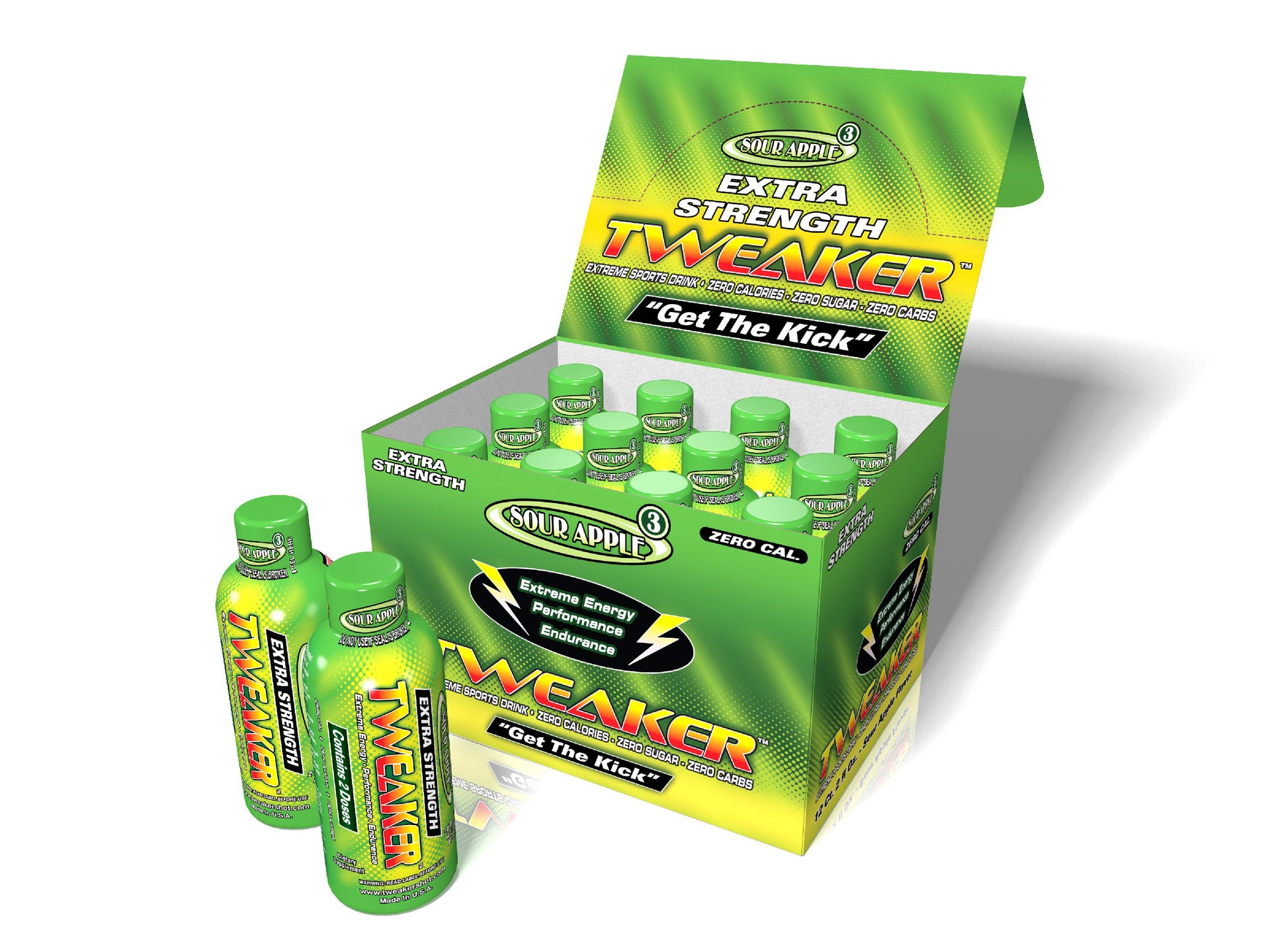
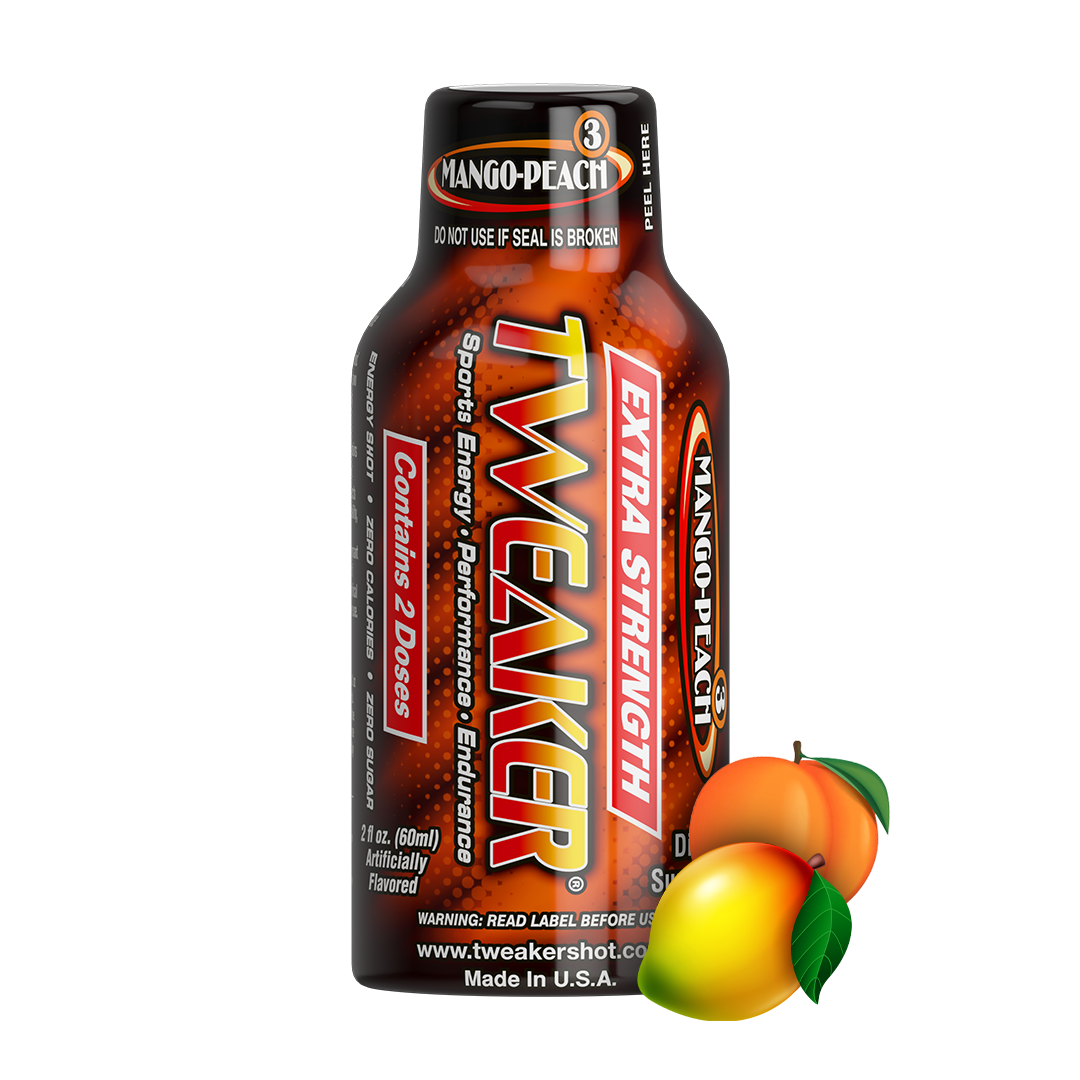
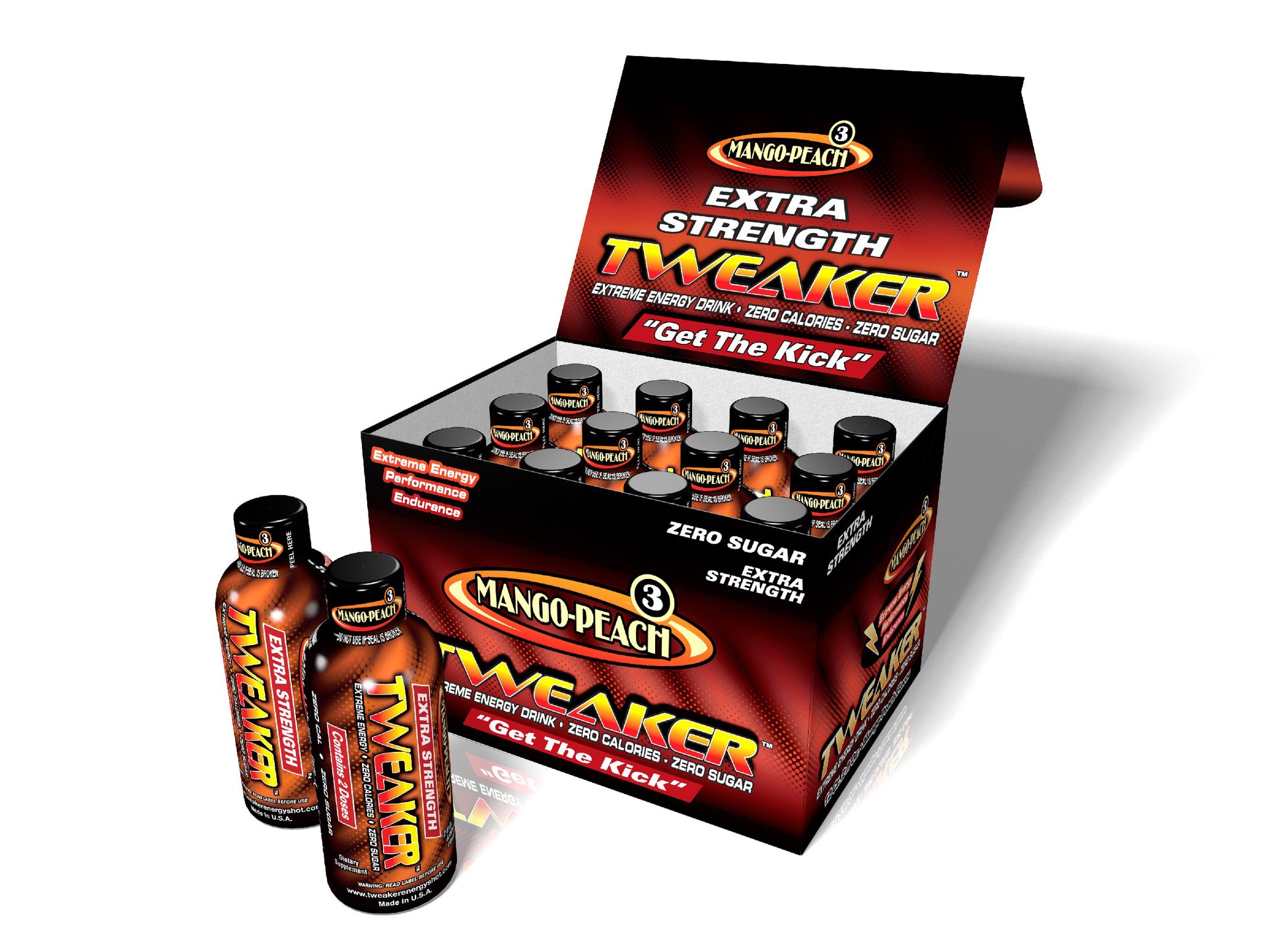
| Tweaker Energy Shots and Tweak Extreme Energy Drinks have 6X's The Kick of other energy drinks. These shots and Drinks contain Zero Sugar, Zero Calories, and Zero Carbs, with less than half of the caffeine of other leading energy drinks. They come in 3 different flavors: Grape, Berry, and Pomegranate, and they don't have that medicine after taste like some of the other sugar free energy drinks have. |
Amount Per Serving % Daily Value* Calories Total Carbohydrate Sugar Total Fat Saturated Fat Protein Proprietary Blend 233 mg Caffeine Evodia Rutaecarpa Fruit (5% Evodiamine) N-Acetyl-L-Tyrosine Yerba Mate Oriental Ginseng Root Extract 5-Hydroxyl-L-Tryptophan Vinpocetine Yohimbe HCL Green Tea Extract * Percent Daily Values are based on a 2,000 calorie diet. † Daily Value not established Other Ingredients: Filtered Water, Citric Acid, Natural Flavors, Sucroalose, Potassium Sorbate, Sodium Benzoate, Fruit & Vegetable Juice for Color 12 oz (354 mL) Dietary Supplement |
| 6 X's The Kick |

| HED |
| Tweaker Energy and Tweak Extreme FAQ's |
| When we say Tweak is 6x the kick, we aren't exaggerating. We feel that the ingredients in Tweak combined with the caffeine, create a synergistic or combined effect that is significantly more active than the leading brands of energy drinks on the market today. We believe that six ounces of Tweak Extreme is equivalent to 12 oz of the leading brands in terms of energy. |
| The shaky feeling usually occurs because your metabolic rate has increased and there is not enough blood sugar to accommodate the increased activity. Eat some carbohydrates, fruit or bread and the shakes should pass quickly. This is another reason we strongly suggest you drink Tweak Extreme and Tweaker with food in your stomach. |
| Caffeine is a diuretic, meaning that it will decrease your body of fluids. It is important to increase your intake of water after consuming Tweak. This is especially important if you drink Tweak or Tweaker and plan on spending prolonged time outdoors or in the sun. When I drink Tweak Extreme, I make it a point to drink at least 16 oz of water within two hours of consuming Tweak. |
| Bottle Ingredients |
| Tweaker energy shots and tweak extreme energy drink are stronger then red bull, monster, rockstar, redline, and 5 hour energy. Tweaker energy shots and tweak extreme energy drink taste better then red bull, monster, rockstar,redline, and 5 hour energy. Tweaker energy shots and tweak extreme energy drink are a better value then red bull, monster, rockstar,redline, and 5 hour energy. Tweaker energy shots and tweak extreme energy drink are cheaper then red bull, monster, rockstar,redline, and 5 hour energy. Tweaker energy shots and tweak extreme energy drink have yerba mate, unlike red bull, monster, rockstar,redline, and 5 hour energy. Tweaker energy shots and tweak extreme energy drink have no sugar, unlike red bull, monster, rockstar,redline, and 5 hour energy. Tweaker energy shots and tweak extreme energy drink are sugar free, unlike red bull, monster, Rockstar, Redline, and 5 hour energy. Tweaker energy shots and tweak extreme energy drink are better for diabetics, then red bull, monster, rockstar,redline, and 5 hour energy. Tweaker energy shots and tweak extreme energy drink has more kick then red bull, monster, rockstar,redline, and 5 hour energy has. Tweaker energy shots and tweak extreme energy drink are better for you then red bull, monster, rockstar,redline, and 5 hour energy.Tweaker energy shots and tweak extreme energy drink have less caffeine then red bull, monster, rockstar, redline, and 5 hour energy. Tweaker energy shots and tweak extreme energy drink works faster then red bull, monster, rockstar,redline, and 5 hour energy. Tweaker energy shots and tweak extreme energy drink lasts longer then red bull, monster, rockstar,redline, and 5 hour energy. Tweaker energy shots and tweak extreme energy drink hits you harder then red bull, monster, rockstar,redline, and 5 hour energy. Tweaker energy shots and tweak extreme energy drink give you an extreme amount of energy, unlike red bull, monster, rockstar,redline, and 5 hour energy. Tweaker energy shots and tweak extreme energy drink have zero sugar, unlike red bull, monster, rockstar,redline, and 5 hour energy. Tweaker energy shots and tweak extreme energy drink are awesome, unlike red bull, monster, Rockstar, Redline, and 5 hour energy. Tweaker energy shots and tweak extreme energy drink are better for your health, then red bull, monster, rockstar,redline, and 5 hour energy. Tweaker energy shots and tweak extreme energy drink have more kick then red bull, monster, rockstar,redline, and 5 hour energy has. Tweaker energy shots and tweak extreme energy drink work better for you then red bull, monster, rockstar,redline, and 5 hour energy.In Japan, the energy drink dates at least as far back as the early 1960s, with the release of the Lipovitan. Most such products in Japan bear little resemblance to soft drinks, and are sold instead in small brown glass medicine bottles or cans styled to resemble such containers. These "genki drinks", which are also produced in Japan, are marketed primarily to the salaryman set.In the UK, Lucozade Energy was originally introduced in 1929 as a hospital drink for "aiding the recovery;" in the early 1980s, it was promoted as an energy drink for "replenishing lost energy."The first drink marketed as being designed to improve the performance of athletes and sports stars arrived in the sixties. It was invented for the football team at the University of Florida, known as the Gators — hence its name, Gatorade. Designed to aid hydration and lengthen performance levels, it claimed that its ingredients were formulated for just such things. However, Gatorade is safer than many energy drinks and is known more as a sports drink.[citation needed]In 1985, Jolt Cola was introduced in the United States. Its marketing strategy centered on the drink's caffeine content, billing it as a means to promote wakefulness. The initial slogan was, "All the sugar and twice the caffeine."In 1995, PepsiCo launched Josta, the first energy drink introduced by a major US beverage company (one that had interests outside just energy drinks), but Pepsi discontinued the product in 1999.In Europe, energy drinks were pioneered by the S. Spitz Company and a product named Power Horse, before the business savvy of Dietrich Mateschitz, an Austrian entrepreneur, ensured his Red Bull product became far better known, and a worldwide best seller. Mateschitz developed Red Bull based on the Thai drink Krating Daeng, itself based on Lipovitan. Red Bull is the dominant brand in the US after its introduction in 1997, with a market share of approximately 47%.[22]In New Zealand and Australia, the current leading energy drinks product in those markets V was introduced by Frucor Beverages Frucor.By 2001, the US energy drink market had grown to nearly 8 million per year in retail sales. Over the next 5 years, it grew an average of over 50% per year, totaling over $3 billion in 2005.[23] Diet energy drinks are growing at nearly twice that rate within the category, as are 16-ounce sized energy drinks. The energy drink market became a $5.4 billion dollar market in 2007, and both Goldman Sachs and Mintel predicted that it would hit $10 billion by 2010. Major companies' such as Pepsi, Coca-Cola, Molson, and Labatt have tried to match smaller companies' innovative and different approach, with marginal success.Energy drinks are typically attractive to young people. Approximately 65% percent of its drinkers are between the ages of 13 and 35 years old, with males being approximately 65% of the market.[23] A 2008 statewide Patient Poll conducted by the Pennsylvania Medical Society's Institute for Good Medicine found that: 20% of respondents ages 21–30 had used energy drinks in high school or college to stay awake longer to study or write a paper; 70% of respondents knew someone who had used an energy drink to stay awake longer to study or work.[24] Energy drinks are also popular as drink mixers.In 2001, Coca-Cola marketed two Powerade brand energy drinks in bullet-shaped, screw-top aluminum bottle cans produced by Exal Corporation of Youngstown, Ohio. Powerade, similar to Gatorade, is better known as a sports drink and is safer than many energy drinks.[citation needed] In 2002, CCL Container and Mistic Brands, Inc., part of the Snapple Beverage Group, worked together on the national launch of Mistic RĒ, which used a recyclable aluminum bottle. Since its introduction, many energy drinks are now packaged in the aluminum bottles or bottle cans.Capri Sun targeted 16-25 year-olds with its Island Refreshers line, graduating from a foil pouch design to a bottlecan or aluminum bottle. In the UK, Coca-Cola has marketed a direct Red Bull competitor, 'Sprite 3G', in a similar 250 mL can and has also launched 'Relentless', a juice-based energy drink in 500 mL cans.UK supermarkets have launched their own brands of energy drinks at lower prices than the major soft drink manufacturers. These are mostly produced by Canadian beverage maker Cott. Tesco supermarkets sell 'Kx"'(used to be known as 'Kick') in 250 mL cans and 1 L bottles, Sainsbury's sell 'Blue Bolt' in similar packaging, Asda sell 'Blue Charge' in similar packaging and Morrison's sell 'Source' in 250 mL cans. Cott sells a variety of other branded energy drinks to independent retailers in various containers.Since 2002 there has been a growing trend for packaging energy drink in bigger cans. Since in many countries, including the US and Canada, there is a limitation on the maximum caffeine per serving in energy drinks, this allows manufacturers to include a greater amount of caffeine by including multiple servings per container. Popular brands such as Redbull, Hype Energy Drinks and Monster have increased the amount of ounces per can. Conversely, the emergence of energy shots has gone the opposite way with much smaller packaging.In 2007, energy drink powders and effervescent tablets were introduced, in the form of a tablet or powder that can be added to water to create an energy drink. These can offer a more portable option to cans and shots.As of 2009, the industry has moved towards the use of natural stimulants and reduced sugar.[citation needed]Caffeinated alcoholic energy drinksEnergy drinks such as Red Bull are often used as mixers with alcoholic beverages producing mixed drinks such as Vodka Red Bull which are similar to but stronger than rum and coke with respect to the amount of caffeine they contain. They are also sold in a wide variety of formulations such as Four Loko and Joose which combine caffeine and alcohol.[25][26] Fruit flavored caffeinated energy drinks in flavors such as watermelon, lemonade and cranberry-lemonade are cheap with a fruity taste. Packaged in 24 ounce cans, they are wildly popular with young people.[27] Four Loko, a product of Phusion Projects, was originally promoted through young employees who were hired to introduce the product to their peer group.[28]Through separate mechanisms, energy drinks act as stimulants, and alcohol as depressants. Energy drinks can lessen some of the subjective effects of alcohol intoxication like dizziness and headache. However, they may be unable to counteract some of the psychomotor impairments of alcohol intoxication.[29] Consequently, the mix can be particularly hazardous as energy drinks can mask the influence of alcohol and a person may misinterpret their actual level of intoxication.[30] In fact, people who drink mixers are more likely than non-mixers to drink more alcohol, and are also more likely to suffer alcohol-related consequences such as assault, injury or being an intoxicated driver, even after adjusting for the number of drinks. Although people decide to drink "unsafe food additive" and said that further action, including seizure of their products, may occur under federal law.[38] In a press release, the FDA states "there is evidence that the combinations of caffeine and alcohol in these products pose a public health concern." They also state that concerns have been raised that caffeine can mask some of the sensory cues individuals might normally rely on to determine their level of intoxication. Warning letters were issued to each of the four companies requiring them to provide to the FDA in writing within 15 days of the specific steps the firms will be taking.Manufacturers have argued that drinking a caffeinated alcoholic energy drink is indistinguishable from drinking a couple of glasses of wine followed by a couple of cups of coffee, a typical dinner behavior.[28]In November 2010, the University of Texas Medical School at Houston reported that energy drinks contain more caffeine than a strong cup of coffee, and that the caffeine combined with other ingredients (sometimes not reported correctly on labels) such as guarana, amino acid taurine, other herbs, vitamins and minerals may interactEnergy drinks consumed with alcohol may affect heart rates, blood pressure and even mental states. The caffeine content of energy drinks range from 70-200 mg per 16-oz serving whereas a 16-oz cup of coffee can contain 80-300 mg.Water or lower-octane sports drinks which contain electrolytes, some minerals and carbohydrate are better choice to reduce the possibility of dehydration and increase in blood pressure.[41]Health experts say caffeine suspends the effects of alcohol, allowing people to continue drinking long after they normally would have stopped. In 2008, Anheuser-Busch agreed to take caffeine out of energy drinks that contain alcohol, after 11 state attorneys general charged the brewer was marketing them to underage drinkers. This action is also followed by MillerCoors in the same year.[42]Going back to 2001, BPOM (Indonesian FDA) ordered the producer of Kratingdaeng and Kratingdaeng S (brands/affiliates of Red Bull) and Galin Bugar and the importer of M 150 energy drinks to withdraw their products because bottles were found to contain 80 milligrams of caffeine, far exceeding the acceptable 50 mg per bottle/can stated on the label. Producer of Kratingdaeng insisted that their over-the-counter products met regulations and refused to apologize, arguing that their products met acceptable standards. But several days later, the company apologized to consumers and promised to intensify the company's quality control system to avoid a similar incident from happening again. Finally, two million bottles of Kratingdaeng and Kratingdaeng S were recalled. Many people believe that it is due to competition among energy drink manufacturers to boost the reputations of their own products. One of former vice chairman of the Indonesian Consumer Foundation (YLKI), urged BPOM to establish a firmer policy to prevent companies from deceiving consumers.What are Energy Drinks?Energy drinks are canned or bottled beverages sold in convenience stores, grocery stores, and bars and nightclubs (in mixed drinks). Most energy drinks are carbonated drinks that contain large amounts of caffeine and sugar with additional ingredients, such as B vitamins, amino acids (e.g. taurine), and herbal stimulants such as guarana. Energy drinks are marketed primarily to people between the ages of 18 and 30 as a stimulant, which is why energy drinks have names that convey strength, power, and speed, and sexuality, such as:•Red Bull Energy Drink•Monster Energy Drink•Full Throttle Energy Drink•Amp Energy Drink•XS Energy Drink•Redline Energy Drink•Rock Star Energy Drink •Spark Energy Drink.History of Energy DrinksAlthough sales of energy drinks in the United States were $3.5 billion in 2005, according to Beverage Digest, the category was only recently created with the launch of the Red Bull Energy Drink.Red Bull was created by Dietrich Mateschitz, an Austrian who adapted the energy drink from a Thai beverage called Krating Daeng, a popular drink with rickshaw drivers in Thailand. The key ingredient in the Thai energy drink was taurine, an amino acid that was first discovered in bulls (this association is responsible for the Red Bull urban legend that the drink's active ingredient is bull urine or semen). Red Bull was introduced to Europe in 1987 and to the United States in 1997.Energy Drinks Contain CaffeineRed Bull, one of the most popular energy drinks, contains nearly 80 mg of caffeine per can, about the same amount of caffeine as a cup of brewed coffee and twice the caffeine as a cup of tea. Other energy drinks contain several times this amount. The amount of caffeine in an energy drink isn't always indicated on the label, so it is difficult to gauge how much one is consuming Another problem with energy drinks is that unlike hot coffee or tea, which is sipped slowly, it's common for typical energy drink consumers to drink large amounts quickly.Some people are sensitive to caffeine and experience anxiety, palpitations, irritability, difficulty sleeping, and indigestion with relatively small amounts. People with heart conditions should avoid large amounts of caffeine, because it is a stimulant.The Combination of Ingredients in Energy Drinks Has Not Been StudiedOne of the biggest concerns is that we just don't know enough about the effect of the combination of ingredients in energy drinks. Many ingredients are believed to work synergistically with caffeine to boost its stimulant power.For instance, one can of Red Bull contains 1000 mg of taurine. A German double-blind study compared a taurine and caffeine drink, a caffeine-only drink, and a placebo drink. Stroke volume--the volume of blood ejected with each beat of the heart--was increased only in the group taking the taurine-and-caffeine drink. Taurine appears to play an important role in muscle contraction (especially in the heart) and the nervous system. Red Bull also contains 600 mg of glucuronolactone, a substance that is naturally found in the body. There is a lack of published information on the health effects of glucuronolactone supplementation in humans or on the safety of this combination. Energy drinks contain sugar (although sugar-free energy drinks are now available), because it is a quick source of energy.B vitamins are sometimes added to energy drinks in small amounts. It makes energy drinks appear healthy, although they probably contribute little. B vitamins are needed to convert food into energy.Some energy drinks contain guarana, a South American herb that is an additional source of caffeine.Energy Drinks Should Not Be Mixed With AlcoholRed Bull and vodka has become a popular mixed drink at bars because it has a reputation for reducing the depressant effects of alcohol (e.g. fatigue) while enhancing the "feel good" buzz. But while people may not feel impaired, their blood alcohol concentration is still high. People may consume larger amounts of alcohol as a result.A study compared the effects of alcohol alone to an alcohol plus energy drink combination. Researchers found that the alcohol plus energy drink significantly reduced subjective alcohol-related symptoms such as headache, weakness, dry mouth, and impairment of motor coordination, even though breath alcohol concentration and objective tests of motor coordination and reaction time didn't reflect this.The caffeine in energy drinks is also dehydrating, which may slow the body's ability to metabolize alcohol.Energy Drinks Should Not Be Consumed During ExerciseEnergy drinks should not be confused with sports drinks such as Gatorade, which are consumed to help people stay hydrated during exercise. Sports drinks also provide carbohydrates in the form of sugar and electrolytes that may be lost through perspiration. The caffeine in energy drinks acts as a diuretic and promotes dehydration. A California high school was the first to ban energy drinks after two students experienced dizziness and disorientation after drinking an energy drink before football practice.People are doing anything they can to add a boost to their day including having energy drinks and supplements, and now, energy shots."I take it when I need it, like early classes, like I said. I'm not a morning person at all, so I'll just take it in the morning just to get my day going and it usually works out," says WVU student Matt Billman.Doctors say these drinks can be very dangerous to your health, especially with their highly concentrated amounts of caffeine."When you have a concentrated amount, and that's what these energy drinks are, a very concentrated amount of stimulant or caffeine in a very small quantity that's easy to get a lot of quickly. If people take too much of it, then yes, it is dangerous," says Dr. Jan Palmer, director of WellWVU.We caught up with some people who use these energy shots, and they say they use them to do what most people do, get that little extra boost they need."At my job we sit there for a long time just waiting on people, helping them out, it gets exhausting and sometimes it's hard just to walk over and get a drink or something, and the energy shots are just right there, so I grab one right next to me and get that instead," says WVU student Dominick Commodore.Dr. Palmer says there are definitely some health risks when you take one of these shots, and some of them can be serious."If you take too much of it, however, it can cause you to be anxious or short tempered or raise your blood pressure. So, people with heart disease who were to do it, or already had high blood pressure, it could be dangerous," adds Dr. Palmer.One of the people we spoke with says they'll still drink these shots even though there are risks involved."I'll obviously take the shots of it, like the small 5-hour energies, but I usually try to stay away from the big Red Bull cans and the Monster cans. But, I'll probably keep using it every once in a while when I need it, when I feel like I do," adds Billman Instead of taking highly concentrated amounts of caffeine like you would find in these small energy shots, Dr. Palmer says there's already something that you probably do each day at home that could give you that energy boost that you need."There's lot of evidence that show that you can be more alert if you get more sleep. I think a lot of people turn to caffeine because of a lack of sleep," says Dr. Palmer.Palmer says if you couple a good diet with exercise and a good sleep schedule, you can get the energy you need to get you through your day. Energy shots are a specialized kind of energy drink. Whereas most energy drinks are generally sold in cans or bottles, energy shots are usually sold in 50ml bottles. Energy shots normally contain the same amount of caffeine, vitamins or other functional ingredients as their larger siblings, and therefore they may be considered concentrated forms of energy drinks.IngredientsSimilar to energy drinks, energy shots contain caffeine, vitamins, and herbs such as guarana, ginseng or ginkgo biloba, taurine, maltodextrin, inositol, carnitine, creatine or glucuronolactone. Most energy shots contain sugar; however, many brands also offer artificially-sweetened 'diet' versions. The central ingredient in most energy shots is caffeine, the same stimulant found in coffee or tea.The average 50ml energy shot has about 80 mg of caffeine. This is approximately equivalent to a cup of coffee. EffectsThe functional ingredients of energy shots are comparable to those of energy drinks, therefore their effects on improvement in mental and cognitive performances and subjective alertness are in line with the effects of traditional energy drinks. HistoryThe idea of energy shots started decades ago in the Far East, notably in Japan, where small “tonics” became very popular among consumers, highly concentrated and without carbonation. With the introduction of energy drinks as of the late ‘80s, the efficacy of these energy shots started to travel the world as a new product format. Until in 2004, the first suppliers like 5-Hour Energy, Nitro2Go, ZipFizz took up the idea, launched these energy shots in the U.S.A. and opened up a sub-segment in the energy drink market. Alone in the U.S.A. there were over 25 brands offering energy shots in 2008.While starting in the U.S.A., the energy shots are more and more also offered in other parts of the world, like Europe,[3][4][5] Asia and Australia.[6] The famous energy drink producer Red Bull launched an energy shot in the U.S.A. in 2009.ConsumersWhile the average consumer is not easy to describe (truck drivers, busy mothers and students alike buy them), they all have in common that they look for “energy in a gulp”, high efficacy with little liquid (“the reduced bladder impact of the significantly smaller volume of liquid in the package” says bevnet.com, a beverage product review service),[8] no carbonation and low calories and always at hand ready-to-drink because no chilling is needed. PackagingEnergy shots are mainly offered in 59ml (2 fluid oz.). plastic bottles of different forms. A niche is emerging within the energy shot space called micro shots. These are shots with 1-5 teaspoons of liquid, such as Dynapep and FIXX Extreme. Products As of June 2009, there are approximately 250 energy shot brands in the US, with 5-Hour Energy owning 78% of the market share and NVE Pharmaceuticals’ Stacker 2: 6 Hour Power with 7%. While many of the products in the energy shot category are marketed by companies who also market energy drinks, crossover success hasn't come easy for even the larger brands such as Monster and Rockstar. In addition, Red Bull, the category leader of the energy drink category, launched an energy shot of its own in April 2009. The top 14 energy shots in the convenience channel for 52 weeks ending April 19, 2009 are: Ubershot , 5-Hour Energy, X-Race Energy shot, Stacker 2, 6 Hour Power, VPX Sports Redline Power Rush, HYPE Energy Shot, .Rockstar Energy Shot, Xtreme Energy, NOS, BDI Marketing Mini Thin Rush, Full Throttle Energy Shot, Kickers, On Go Energy, Ephrine Plus, Nitro 2 Go, Peptime 357 Magnum,Badboy Energy Shots, Relentless Energy, and Lucozade. Energy Shots Review: Do They Work? Are They Safe? Energy shots promise the kick of full-size energy drinks in a smaller, more convenient package. Tired, stressed-out college students and workers have embraced energy shots, which promise a quick, convenient boost with fewer calories and less sugar than full-size energy drinks. Sales of the 2-to-3 ounce shots soared to $544 million in 2008, double those of the previous year, according to the Information Resources Inc., a Chicago-based market research firm. In fact, energy shots are the fastest-growing segment of the $4.6 billion energy drink market, according to the market research firm Mintel. Living Essentials pioneered energy shots in 2004 with 5-Hour Energy, which still holds more than 75% of the market, says Information Resources. Industry heavyweights such as Red Bull, Monster Energy, and Coca-Cola have since introduced their own energy shots. Their ingredients vary, but most contain caffeine, B vitamins and taurine (an amino acid found in food from animal sources) as well as flavorings and artificial sweeteners.The sugar-free shots are not only portable, but lower in calories than most energy drinks. The 2-ounce 5-Hour Energy shot, which is artificially sweetened, has 4 calories. A regular 8-ounce Red Bull energy drink, by comparison, has 100 calories, while a sugar-free Red Bull has 10 calories.Energy Shots: Caffeine Concerns However, the shots tend to have about as much caffeine as regular energy drinks - and it's caffeine that provides most of the kick, experts say. Because of that, nutritionists urge caution, especially for those who also drink coffee or other caffeine-containing drinks. "I’m seeing a lot of combinations -- coffee, 5-Hour Energy, green teas -- and if you add up all the mega doses of caffeine during the day, it can cause problems," says Jim White, RD, a national spokesman for the American Dietetic Association and owner of Jim White Fitness Studios in Virginia Beach, Va. Specifically, too much caffeine can cause nervousness, trouble sleeping, nausea, vomiting, rapid heartbeats, and higher blood pressure. Many makers of energy shots say children and those who are pregnant, nursing, or sensitive to caffeine should avoid the beverages. 5-Hour Energy advises no more than two bottles a day. Energy shot makers are not required to disclose their products' caffeine content, although a group of scientists has petitioned the FDA to require that this information be listed on labels. 5-Hour Energy says only that one of its regular shots contains about the same amount of caffeine as a cup of the leading premium coffee -- which would work out to 180 milligrams for an 8-ounce cup at Starbucks. (5-Hour Energy also comes in decaf and extra-strength.) Coke’s NOS PowerShot has 125 milligrams of caffeine, and Rockstar Energy Shot has 200 milligrams. A 12-ounce can of Coke, by comparison, contains 35 mg of caffeine. Some energy shots also contain guarana, a plant that produces caffeine. "Caffeine in doses of 200 or 300 milligrams a day is moderate and fine, but if you’re starting to get way over that, I would cut back," says Chris Rosenbloom, RD, PhD, a professor of nutrition at Georgia State University in Atlanta. Caffeine and other stimulants in energy shots are of special concern for those who play sports, Rosenbloom says. Yet getting a quick boost before exercising is one of the key reasons consumers say they take energy shots, according to Mintel. "The point of exercise is to get your heart rate up and sustain your blood pressure. You don’t want to go into that already revved up," Rosenbloom says. "If you have any underlying health issue, that could trigger a heart attack, a stroke, some kind of episode of really high blood pressure." Some people drink energy shots to try to sober up after drinking alcohol so they can drive home. "Being a more alert drunk isn’t any safer than being a drunk, but that seems to be a growing use in some of my younger patients." says Brent Bauer, MD, director of the Complementary and Integrative Medicine Program at Mayo Clinic in Rochester, Minn. Who Drinks Energy Shots? Young men are the most likely to consume energy drinks and shots, according to Mintel, although the market among all adults ages 25-45 is growing. Youth ages 12-17 who drink energy drinks down an average of 5.2 cans a month, according to Mintel. Adults drink an average of 4.6 cans. "Our target market is working adults who experience fatigue and feel they can benefit from an energy boost," says Lynn Petersmarck, advertising director for Living Essentials. Nutritionists are also concerned about other ingredients in the shots and how they might interact. They would like to see more studies on the safety and effectiveness of the blends. Because they are marketed as dietary supplements, energy shots do not require FDA approval before hitting the market. "A lot of these products contain multiple, multiple amounts of ingredients such as taurine and tyrosine and phenylalanine, of course caffeine and guarana," White says. "There’s not enough research on how they’re going to react together, especially down the road." Bauer says drinkers may get some energy benefits from taurine, but not from high doses of B vitamins. 5-Hour Energy, for example, claims to provide more than 8,000% of the recommended daily intake for B12, which is found in animal products and helps form red blood cells, and 2,000% of the recommended intake of B6. Vitamin B6, also found in animal products as well as in beans, whole grains, and fortified cereals and breads, helps boost the immune system and produce red blood cells. "None of them are going to boost energy unless you’re B-deficient," Bauer says. In general, B vitamins aren’t toxic in large amounts, Rosenbloom says. They’re water-soluble, which means they pass out of the body in urine. But high doses of B6 can cause nerve damage, tingling, and numbness in the arms and legs. Petersmarck says the products are safe. "Everything in 5-Hour Energy is already contained in foods, such as apples, avocados, grains, and nuts, or is naturally occurring in your body," she says. The company warns that those who are sensitive to vitamin B3 (niacin) may experience a niacin flush that involves a brief reddening of the skin and a hot, prickly feeling. One shot of 5-Hour Energy contains 150% of the recommended daily intake of niacin, which is found in animal products, beans, and fortified cereals and breads and helps the body convert food to energy. Instead of reaching for an energy shot next time you need a pick-me-up, try looking at what’s behind that tiredness, says Bauer. "If I took it once or twice a year because I wanted to be more alert for an exam, that’s different than if I’m taking it two or three times a day," says Bauer. "If you need something chronically, then there’s something wrong. That’s your body telling you to change something, whether it’s your diet, your exercise, your stress level, your sleep." If you want to boost energy levels naturally, here are some suggestions from Bauer, Rosenbloom and White: Eat several small meals throughout the day rather than three large ones. Avoid large amounts of sugar and fat. Don’t skip meals, especially breakfast. Take a quick exercise break, such as a short walk. Exercise regularly. Consider paced breathing, which can improve the heart rate and boost relaxation, or meditating for a short time. Reduce stress. Get enough sleep. Customers say drinking Tweaker and Tweak Extreme reduce their appetite. Product Information: Tweak ExtremeTM Extreme Energy Booster - Zero Calories - Zero Sugar - Zero Carbs Not for Sale to Minors Do not consume on an empty stomach. Do not drink more than 6 oz in an eight hour period. Use inconsistent with the label may cause adverse effects. Do not use daily for more than 3 weeks. Serve Chilled Store in a cool dry place Refrigerate after opening Shake Well Before Use Warning: NOT FOR USE BY INDIVIDUALS UNDER THE AGE OF 18 YEARS. DO NOT USE IF PREGNANT OR NURSING. Consult a physician or licensed qualified health care professional before using this product if you have, or have a family history of heart disease, thyroid disease, diabetes, high blood pressure, depression or other psychiatric conditions, glaucoma, difficulty in urinating, prostrate enlargement, or seizure disorder, or if you are using a monoamine oxidase inhibitor (MAOI) or any other dietary supplement, prescription drug, or over-the counter drug containing ephedrine, pseudoephedrine, or phenylpropanolamine (ingredients found in certain allergy, asthma, cough or cold, and weight control products). Do not exceed recommended serving. Exceeding recommended serving may cause adverse health effects. Discontinue use and call a physician or licensed qualified health care professional immediately if you experience rapid heartbeat, dizziness, severe headache, shortness of breath, or other similar symptoms. Individuals who are sensitive to the effects of caffeine or have a medical condition should consult a licensed health care professional before consuming this product. Do not use this product if you are more than 15 pounds over weight. The consumer assumes total liability if this product is used in a manner inconsistent with label guidelines. Do not use for weight reduction. KEEP OUT OF REACH OF CHILDREN LEO SCIENTIFIC INC LAS VEGAS NV 89120 MADE IN USA WARNING: READ LABEL BEFORE USE Directions: Shake well prior to use. Always begin use with 4oz of beverage to assess tolerance. Never exceed more than two servings daily. Do not consume on an empty stomach. Consuming this beverage on an empty stomach may cause nauseousness. There are 3 servings in a 12 oz bottle of Tweak Extreme. Tweak Extreme and Tweaker have been placed in over 3400 stores across America in less than 90 days. Tweak Extreme Energy Drink and Tweaker 2oz are the most powerful energy drinks on the market! We have begun marketing it in the DFW area. In the first week of sales we introduced the drink into over one hundred retail independent stores in the DFW area and more than half called for re-supply in the first week!! |
|
|||||||||||||||||||||||||||||||||||||||||||||||||||||||||||||||||||||||||||||||